How the Way You Arrange Your Furniture Is Secretly Running Your Life
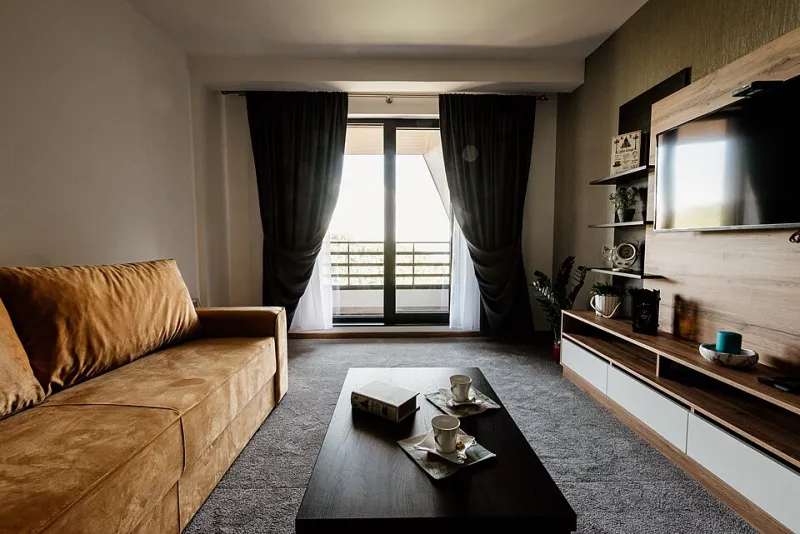
Photo: Shixart1985, CC BY 2.0, via Wikimedia Commons
You've rearranged your living room three times and it still feels... off. Something about it makes you restless, or maybe just weirdly tired the moment you walk through the door. Before you blame the apartment itself, consider this: it might not be the space that's the problem. It might be what you've put in it — and where.
Spatial psychology is a real field, and researchers have spent decades studying how the physical environment shapes the way we think, feel, and behave. Combined with design principles that go back thousands of years, there's actually a lot of practical guidance out there for anyone who wants their home to work for them, not against them.
Let's break it down.
Your Brain Is Always Reading the Room
Human beings are wired to scan their environment constantly — it's an evolutionary habit left over from when knowing where the exits were could save your life. That instinct hasn't gone anywhere. Your nervous system is still quietly assessing every room you walk into: Where are the entry points? What's behind me? Am I exposed or protected?
When your furniture arrangement triggers any sense of vulnerability — say, a desk that faces a wall with your back to the door, or a sofa shoved into a corner with no sightline to the entrance — your brain registers low-level stress. You might not consciously notice it, but over hours and days, that background hum of unease adds up. It can look like distraction, irritability, or just feeling inexplicably drained by the time you're done working from home.
This is actually one of the core ideas in feng shui, the Chinese philosophical system of spatial arrangement that's been influencing interior design for over 3,000 years. The "command position" — placing your bed, desk, or main seating so you can see the door without being directly in line with it — is one of feng shui's most fundamental principles. And honestly? Modern psychology kind of backs it up.
The Desk Dilemma: Why Your Home Office Setup Might Be Killing Your Focus
If you're working from home (and let's be real, a lot of us still are, at least part of the time), your desk placement deserves serious attention. Facing a blank wall all day is a fast track to mental fatigue. Research on cognitive restoration theory suggests that exposure to natural elements — even just a window view of trees or a patch of sky — helps restore directed attention, the kind you need to actually concentrate.
If you can, position your desk near a window, but to the side of it rather than directly facing it. Direct glare on your screen is its own productivity killer. A side-lit setup gives you the mood-lifting benefits of natural light without the squinting.
Also worth considering: visual clutter in your direct line of sight competes for your attention whether you realize it or not. If your desk faces a pile of laundry or an overstuffed bookshelf, your brain is doing tiny amounts of processing work every time your eyes drift that direction. Clear sightlines = clearer thinking.
Living Room Layout and the Social-Stress Connection
The living room tends to be where we decompress, connect with people we live with, and — increasingly — try to do all of that at the same time as half a dozen other things. How you arrange this space has a surprising amount of influence over whether it actually feels relaxing.
One of the most common mistakes people make is pushing all the furniture against the walls. It feels intuitive — more floor space, right? — but it actually creates a weirdly formal, disconnected feel, like a waiting room. Conversation becomes harder because everyone is farther apart, and the center of the room feels like dead space.
Pulling seating inward, even just a foot or two, and anchoring the arrangement with a rug creates what designers call a "conversation zone" — a setup that subconsciously signals that this is a place to settle in and connect. That psychological cue matters more than you'd think, especially if you live with a partner, roommates, or kids.
For solo dwellers, a thoughtfully arranged living room can still do a lot of emotional heavy lifting. A reading chair positioned near a window with a small side table creates what some designers call a "sanctuary spot" — a defined area with a single purpose that your brain learns to associate with rest and downtime. That kind of spatial conditioning is genuinely powerful.
The Bedroom: Your Layout Is Either Helping or Hurting Your Sleep
Sleep researchers and feng shui practitioners actually agree on more than you'd expect when it comes to bedroom layout. The big ones:
Avoid placing your bed directly under a window. Drafts, light changes, and the subconscious sense of exposure can all interfere with sleep quality. If your floor plan doesn't give you many options, blackout curtains and a fabric headboard can help buffer the effect.
Don't sleep with your feet pointing directly at the door. This one comes straight from feng shui (it's sometimes called the "coffin position," which is admittedly a little dramatic), but the underlying logic is sound — it's another version of the exposure/vulnerability response. Even a slight angle can make a difference.
Keep work stuff out of the bedroom if at all possible. This is classic sleep hygiene advice, and it's worth repeating: your brain forms strong associations between spaces and activities. A bedroom that doubles as a home office trains your nervous system to stay alert in the same place you're trying to wind down. If your apartment doesn't give you a choice, a room divider or even a curtain panel to visually separate the "work zone" can help your brain make the distinction.
Small Tweaks, Real Results
You don't need to gut your entire apartment to start feeling the difference. Here are a few low-effort changes that can shift the energy of a space almost immediately:
- Rotate your sofa so it faces the room's main entry point rather than a wall or TV — even partially.
- Move your bed to the "command position" if it isn't already: headboard against a solid wall, door visible from where you sleep.
- Clear the path between your front door and your main living area. A cluttered entryway creates friction (literally and psychologically) the moment you come home.
- Add a plant or two near your desk or in your line of sight from the couch. Biophilic design research consistently shows that even small amounts of greenery reduce cortisol levels.
- Define zones in open-plan spaces using rugs, lighting, or furniture groupings so each area has a clear purpose — your brain will thank you.
Your Space Is Talking to You
The beautiful thing about understanding spatial psychology is that it gives you agency. You're not stuck with a bad-feeling apartment just because the bones aren't perfect or your landlord won't let you repaint. Furniture placement is completely within your control, costs nothing to change, and can genuinely shift how you experience your home day to day.
Pay attention to how you feel in different parts of your space. Where do you naturally gravitate when you want to relax? Where do you feel most alert? Those instincts are data. Work with them instead of against them, and you might be surprised how much better home can feel.