You've Gone Blind to Your Own Apartment — Here's How to Actually See It Again

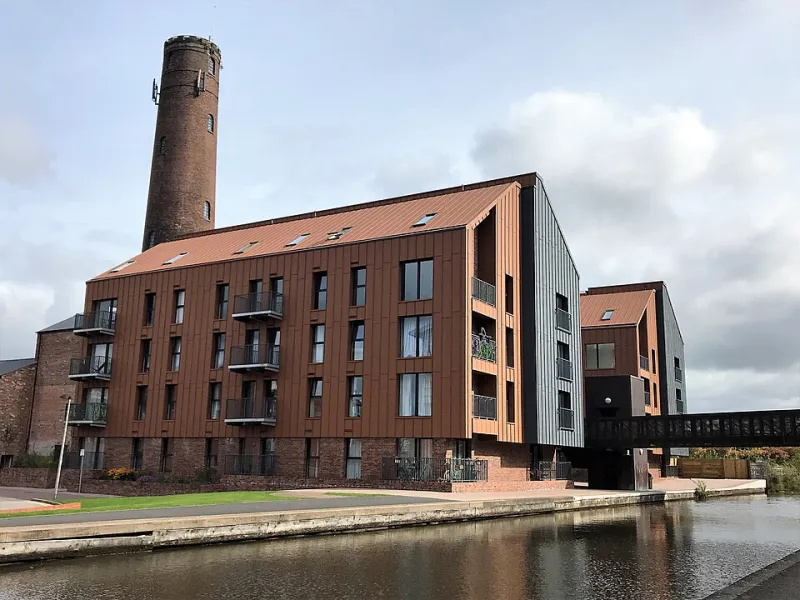
Photo: Jacob W. Frank, Public domain, via Wikimedia Commons
Think about the last time you truly noticed your apartment. Not just moved through it on autopilot — grabbed your keys, fed the cat, opened the fridge — but actually stopped and looked at it. Saw the furniture arrangement as a choice. Noticed what was hanging on the walls. Registered the light at a particular time of day.
For most of us, that moment was probably when we first moved in. And somewhere between then and now, we went blind.
It's not laziness or ingratitude. It's neuroscience. And understanding why it happens is the first step toward fixing it.
What Familiarity Blindness Actually Is
Your brain is an efficiency machine. One of its core jobs is to filter out information that isn't new or threatening — which means the longer you live somewhere, the less your brain bothers to process it. The cracked baseboard you've been meaning to address for eight months? Invisible. The gallery wall you spent a whole weekend hanging? Background noise. The weird dead corner in your living room you've been "figuring out"? You've genuinely stopped seeing it.
Cognitive scientists call this habituation — the process by which repeated stimuli stop registering. It's the same reason you stop hearing the hum of your refrigerator and stop noticing the neighbor's dog. Your brain decided it wasn't worth the processing power.
The problem is that habituation doesn't discriminate between what's fine and what's not. It neutralizes your awareness of both the things that are working beautifully and the things that are slowly making you miserable. You stop noticing the gorgeous light that hits your kitchen at 4pm, and you stop noticing the furniture arrangement that's been blocking the flow of the room for two years.
The Real Cost of Not Seeing Your Space
Familiarity blindness has a practical cost that goes beyond aesthetics. When you stop noticing your apartment, you stop improving it. Small problems compound. Opportunities for genuine transformation sit invisible for months or years. You end up living in a version of your home that stopped evolving the day you ran out of new-apartment energy.
There's also an emotional cost. Research on environmental psychology consistently shows that the spaces we live in have a significant effect on our mood, focus, and sense of wellbeing. A space that's quietly dysfunctional — awkward flow, bad lighting, clutter you've stopped registering — still affects you even when you can't consciously identify the source. You just feel vaguely off, and you can't explain why.
The Listing Photo Trick
One of the fastest and most effective ways to break through familiarity blindness is also one of the most jarring: photograph your apartment as if you're listing it for rent.
Open Zillow or Apartments.com and look at a few listing photos. Notice how they're shot — wide angles, good light, every room staged for a stranger's first impression. Now do that to your own apartment.
Get in the corners. Use your phone's wide-angle lens. Photograph every room from the doorway, the way a real estate photographer would. Then look at the photos.
You will see your apartment completely differently. That pile of stuff in the background you'd stopped registering? Glaring. The furniture arrangement that made sense in your head? Suddenly obvious that it's blocking the natural focal point of the room. The empty wall you've been meaning to do something with for a year? Right there, undeniable, in every single photo.
This technique works because a photograph forces distance. You're no longer in the space — you're looking at it. And looking at it as a stranger would is exactly what your brain needs to reset.
Change Your Route Through the Space
Another surprisingly powerful reset: physically change the way you move through your apartment for a week.
If you always enter the living room from the hallway, try coming in from the kitchen. Sit in a chair you never usually sit in. Eat at the dining table instead of the couch. Make your morning coffee and stand in a different spot while it brews.
This sounds almost absurdly simple, but it works. New vantage points force your brain to process familiar spaces as if they're new. You'll notice things — a view you'd forgotten about, a corner that looks completely different from six feet to the left, a piece of furniture that obviously belongs somewhere else.
Invite Someone Who's Never Been There
Few things snap you out of familiarity blindness faster than seeing your apartment through someone else's eyes — literally.
Invite a friend who's never been to your place. Watch where they look when they walk in. Notice what they comment on (or conspicuously don't comment on). Pay attention to where they naturally gravitate and where they seem unsure where to sit or put their bag.
You don't have to turn it into a design consultation. Just observe. Their fresh perspective will surface things about your space that you've completely stopped registering — both the things that are genuinely great and the things that have been quietly not working for longer than you'd like to admit.
The Slow Walk Audit
Set aside twenty minutes — no phone, no podcast, no agenda — and do a slow walk through every room of your apartment. The goal isn't to clean or fix anything. It's just to look.
Ask yourself a few questions in each space: Does this room feel the way I want it to feel? Is there anything here I actively dislike? Is there anything here I genuinely love that I've stopped noticing? What's one thing I'd change if I had an afternoon and a hundred dollars?
Write down your answers. You'll be surprised how much surfaces when you give your own apartment your full, unhurried attention.
Seeing Again Is the First Step to Loving It Again
The goal of all of this isn't to find problems. It's to reconnect with the space you've been paying rent on every month — to remember what drew you to it in the first place, and to see clearly what's evolved and what's been quietly stagnating.
Your apartment has more potential than you're currently giving it credit for. You just have to see it again first.