Your Apartment Has a Smell — Here's How to Make It a Good One

Photo by Photo by Danilo Rios on Unsplash on Unsplash
You've got the gallery wall dialed in. The throw blanket is perfectly draped. The lighting is warm and layered like you actually know what you're doing. But the moment someone walks into your apartment, before they even register any of that, their brain is already processing something you probably never thought to design: the smell.
Scent is the most underrated element of interior styling, full stop. It bypasses conscious thought entirely and goes straight to the part of your brain that controls emotion and memory. That's not a decorating opinion — that's neuroscience. And once you start treating fragrance as a legitimate design layer, the way your home feels to you and to everyone who visits will shift in ways you genuinely didn't see coming.
So let's get into it.
Why Your Apartment Smells the Way It Does (And Why It Matters)
Every home has a baseline scent — a combination of the building itself, your cooking habits, your furniture, your laundry products, and yes, just you. Most of us go completely nose-blind to it within a few days of moving in. Your guests, however, are not nose-blind. They're getting the full experience.
In rentals specifically, you're often working against a pretty tough starting point. Old carpet, residual paint fumes, a bathroom with questionable ventilation, a kitchen that absorbed decades of other people's cooking — these are real challenges. The good news is that with a little intention, you can completely rewrite the olfactory story of your space.
The key is to think in layers, just like you would with lighting or textiles. One candle on the coffee table isn't a scent strategy. A thoughtfully curated, room-by-room approach? That's a vibe.
Start With a Clean Slate (Literally)
Before you introduce any fragrance into your apartment, you need to deal with the sources of bad smell first. Masking odors with heavy candles or sprays is the olfactory equivalent of throwing a throw blanket over a broken couch — it doesn't actually fix anything.
In a rental, start by deep cleaning areas that tend to trap odors: carpet, upholstered furniture, kitchen surfaces, and bathroom grout. Baking soda is your best friend here. Sprinkle it on carpet, let it sit for 30 minutes, vacuum it up. Place an open box in the back of your fridge. It's boring advice, but it works.
If you're dealing with a particularly funky smell that seems to be coming from the walls or floors — common in older buildings — activated charcoal bags are worth trying. They're non-toxic, mess-free, and actually absorb odor molecules rather than just covering them up. A few strategically placed near air vents or in closets can make a noticeable difference.
Also: your trash can, your dish rack, and the area behind your toilet are working against you. Deal with those first.
Room-by-Room Scent Strategy
Once you've got a neutral baseline, you can start building up. The goal isn't to make every room smell like a department store — it's to create a subtle, cohesive sensory experience that feels intentional without being overwhelming.
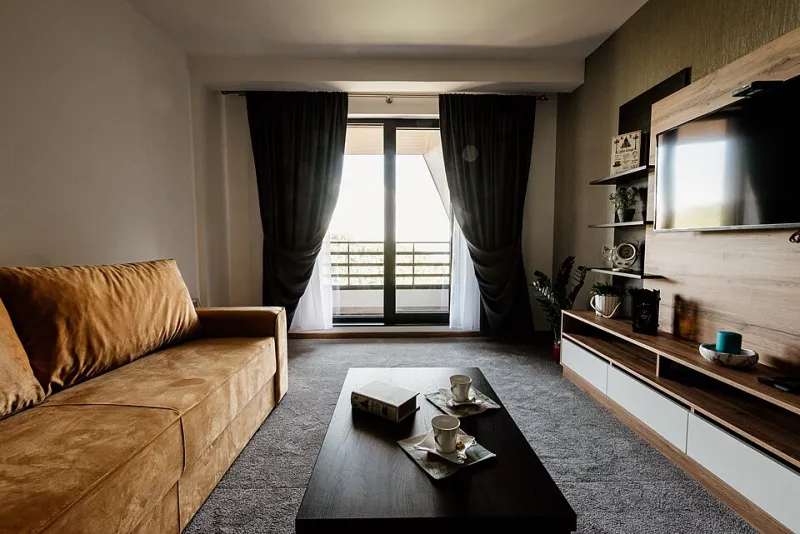
Living Room This is your anchor space, so it deserves your most considered fragrance choice. Candles work beautifully here, both functionally and aesthetically. Look for options with wooden wicks (they crackle, which adds an auditory bonus) and scents that feel grounding — think cedarwood, sandalwood, amber, or a warm vanilla. These kinds of base-note-heavy fragrances tend to make a space feel more settled and lived-in, which is exactly the energy you want in a room where people hang out.
Place candles at varying heights — one on the coffee table, one on a bookshelf, one on a side table — rather than clustering them all in one spot. The scent will diffuse more evenly, and it looks more intentional.
Kitchen The kitchen is a unique challenge because it's constantly producing its own smells, some great (fresh bread, garlic in olive oil) and some not so great (last night's fish). Rather than fighting that with heavy fragrance, lean into natural solutions. A small pot of simmering water with citrus peels, cinnamon sticks, and a couple of cloves is a classic trick that makes your kitchen smell incredible and costs almost nothing.
For everyday maintenance, a reed diffuser with a fresh, clean scent — eucalyptus, green tea, or lemon — works better than a candle near an open flame. Keep it on the counter near the window if you have one, where airflow will help distribute it.
Bedroom Your bedroom scent should be doing a specific job: helping you wind down and sleep better. Lavender is the obvious choice here, and it's obvious for good reason — there's solid research behind its calming properties. But if lavender isn't your thing, chamomile, bergamot, and ylang-ylang are all solid alternatives.
Skip the candles while you sleep (obviously) and opt instead for a pillow spray, a small essential oil diffuser, or linen sachets tucked into your pillowcase. The goal is subtle — you want to notice it when you first lie down, not feel like you're sleeping in a spa treatment room.
Bathroom Even a tiny rental bathroom can feel like a retreat with the right scent approach. A eucalyptus bundle hung from your shower head is a social media staple for a reason — the steam activates the oils every time you shower, and it looks genuinely beautiful. Replace it every few weeks as it dries out.
For daily freshness, a small reed diffuser or a solid fragrance disk (they tuck behind the toilet or inside a cabinet) keeps things consistently pleasant without requiring any maintenance.
The Art of Layering Without Overwhelming
Here's where most people go wrong: they buy a bunch of different candles and diffusers in completely different scents and wonder why their apartment smells like a Yankee Candle outlet. The trick to layering scents is to work within a scent family — warm and woody, fresh and citrusy, floral and light — and keep your rooms complementary rather than competing.
A good rule of thumb: pick one "hero" scent for your main living area, then choose supporting scents for other rooms that share at least one note in common. If your living room candle is cedarwood and amber, your bedroom might be sandalwood and lavender. Different, but harmonious.
Also, less is genuinely more. A well-scented apartment should register as "this place smells amazing" not "I can smell this from the hallway."
Natural Alternatives Worth Knowing About
If you're sensitive to synthetic fragrances — or just prefer a more low-key approach — there are plenty of natural options that do the job beautifully. Fresh herbs like rosemary and mint can be kept in small pots on a windowsill and release fragrance whenever you brush against them. Beeswax candles have a natural, subtle honey scent when burned. And houseplants like jasmine or gardenia can fragrance a room entirely on their own if you catch them in bloom.
For renters especially, these options are great because they don't involve any products that could potentially stain walls or surfaces — something to keep in mind with oil diffusers near light-colored walls.
Your Home Should Feel Good in Every Sense
Designing a space that looks beautiful is only half the work. The apartments that truly feel special — the ones you remember, the ones that make you want to stay — engage all of your senses, not just your eyes. Scent is the layer most people skip entirely, which means adding it thoughtfully puts you miles ahead.
Start small. Pick one room. Try one new fragrance approach this week. Then notice how differently that room feels — to you, and to everyone who walks into it.