Is Your Floor Plan Killing Your Social Life? Here's What Your Apartment Is Telling You
You keep telling yourself you'll have people over soon. Maybe once you get the place a little more organized. Maybe after you find a better couch. Maybe when things slow down. But here's a thought worth sitting with: what if the apartment itself is the reason socializing feels like such a production?
It sounds a little out there, but interior designers and behavioral researchers have been saying it for years — the physical layout of your living space has a measurable effect on how you behave inside it. And if your apartment is accidentally optimized for solo Netflix sessions and zero visitors, no amount of good intentions is going to override that. The good news? You don't need to knock down walls or break your lease to fix it.
The Psychology Behind Why Layouts Matter
Humans are deeply responsive to their environments. We read physical spaces the same way we read social cues — unconsciously, constantly, and with a lot of snap judgments. An apartment that feels closed off, hard to navigate, or weirdly arranged around one person's solo routines will subtly discourage you from even imagining guests in it.
This isn't just abstract theory. Think about the last time you walked into someone's home and immediately felt at ease versus the times you felt like you were interrupting something. Chances are, the comfortable spaces had a few things in common: a clear sense of where to enter and settle, seating that faced other people rather than a screen, and a general feeling that the space was built for more than one body.
Your apartment is either working with your social instincts or against them. Let's figure out which one it's doing.
The Entryway Problem Nobody Talks About
The entry point of your apartment is doing more psychological heavy lifting than you realize. When guests walk in and immediately face a wall, a pile of shoes, or the back of a couch, the message is pretty clear: this space wasn't designed with you in mind.
A welcoming entryway doesn't need to be large — it just needs to signal intention. A small console table, a mirror, a place to hang a coat or drop a bag — these aren't just decorative. They're functional gestures that say you were expected here. Even in a studio where the door opens practically into the living area, a defined landing zone (a small rug, a hooks-and-shelf combo from IKEA, a single statement light) creates a moment of arrival that makes guests feel received rather than just... present.
If your entryway is currently a bottleneck of anxiety, start there. It's the handshake your apartment gives before you say a word.
Open Floor Plans: A Double-Edged Sword
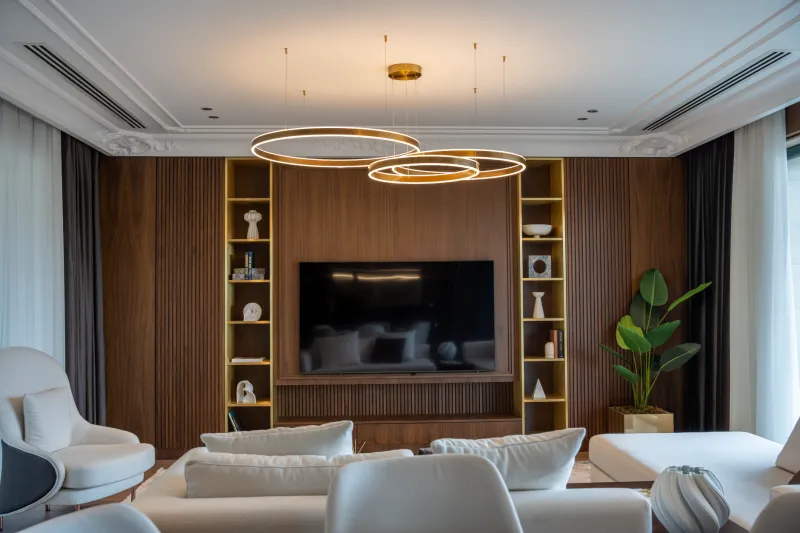
Open layouts get a lot of praise, and for good reason — they feel airy, modern, and social by design. But an open floor plan without intentional zoning can actually work against you. When everything bleeds into everything else, there's no natural gathering spot. Guests drift. Conversations fragment. The kitchen becomes a weird social center by default because at least there's a counter to lean on.
If you've got an open layout, your job is to create implied rooms within the space. A large area rug under the seating arrangement tells everyone: this is the living room, this is where we hang out. A sofa positioned away from the wall and angled toward chairs rather than a TV creates a conversation pit that pulls people in. Bookshelves or open shelving units can act as soft dividers between a dining area and a lounge zone without closing anything off.
The goal is to give your open space some bones — structure that people can orient themselves around.
Divided Spaces: When Walls Work Against You
On the flip side, apartments with lots of separate rooms can feel private to the point of isolating. If your living room is down a hallway, or your kitchen is fully closed off from the rest of the space, you might find that hosting feels logistically awkward — you're constantly disappearing to grab drinks or check on food while your guests sit alone in another room.
The fix here isn't architectural. It's about creating flow and keeping conversation alive across physical thresholds. A pass-through window between kitchen and dining area can be styled with open shelving and pendant lighting to feel intentional rather than dated. Keeping the kitchen door open while you cook, arranging a bar cart near the living room so drinks are always accessible without a trip to another zone, or moving a small accent chair into the kitchen area so someone can sit and chat while you prep — these are low-lift moves that dramatically change the social dynamics of a divided layout.
The Seating Arrangement Is the Whole Thing
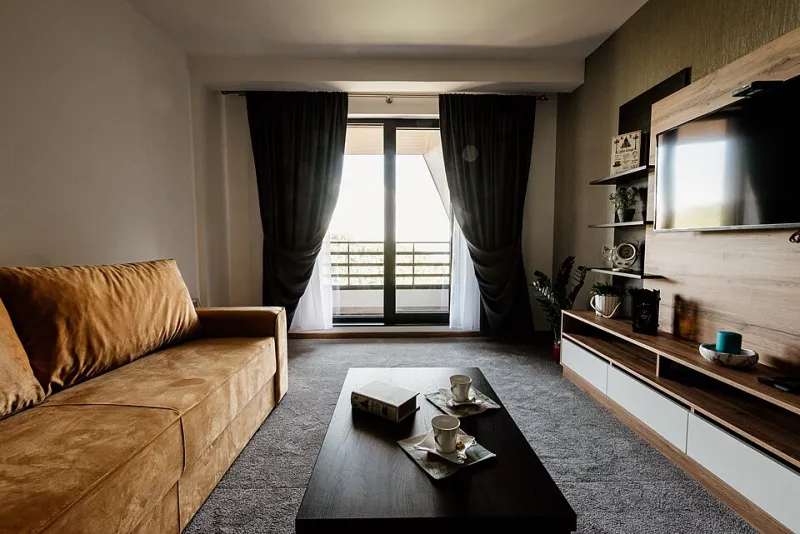
If there's one design decision that has the single biggest impact on your social life, it's where and how your seating is arranged. Most people default to pointing everything at the TV — couch facing the screen, chairs angled toward it, coffee table acting as a barrier between humans and the rest of the room. It works great for watching things. It works terribly for talking to people.
Social seating is arranged in conversation clusters. Think about the layout of a good hotel lobby or a cozy bar — seating faces other seating. There's a surface nearby for drinks. The arrangement creates a contained, comfortable zone where eye contact is natural and conversation doesn't require effort.
You don't have to ditch the TV setup entirely. Try angling two chairs toward the couch rather than the screen, or adding an ottoman that doubles as extra seating when guests arrive. Even pulling the coffee table a few inches closer to the sofa creates a cozier, more connected feel. Small adjustments, real results.
Lighting as a Social Cue
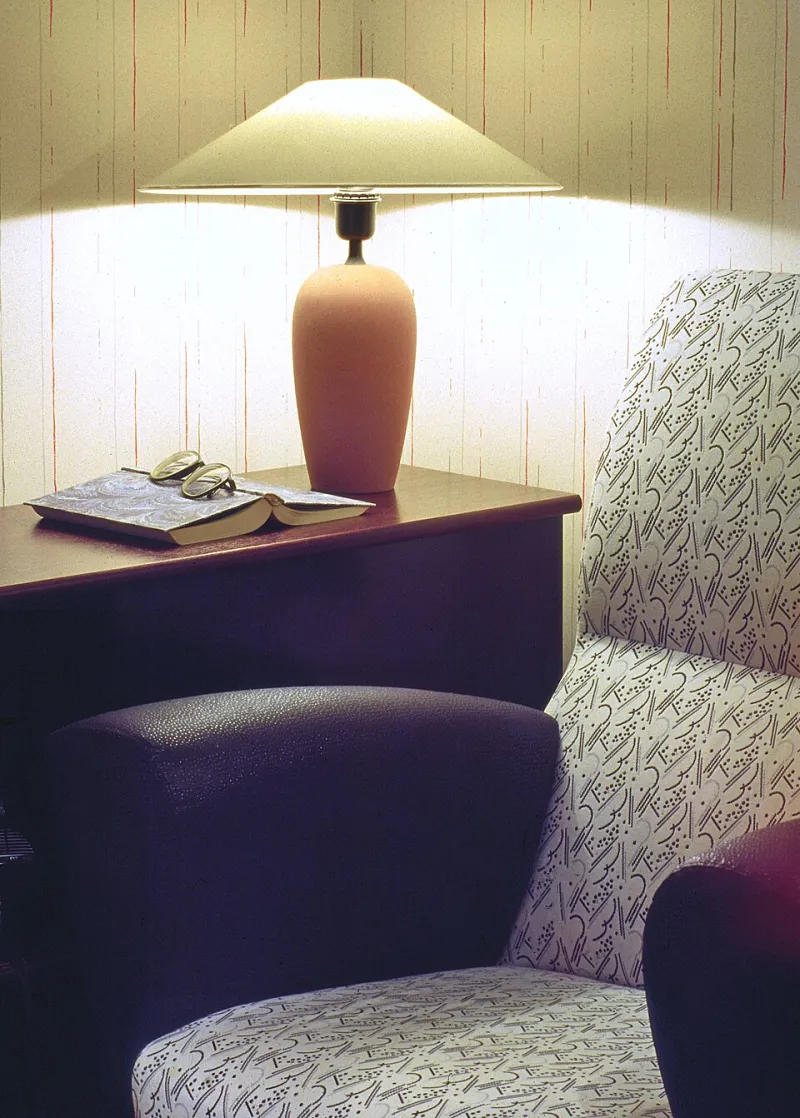
Harsh overhead lighting is the enemy of a good gathering. It flattens everything, kills the mood, and makes your apartment feel more like a waiting room than a place people want to linger. Soft, layered lighting — floor lamps, table lamps, candles, dimmer switches if your rental allows — signals that the space is meant for relaxing and connecting, not just functioning.
When you're expecting guests, turn off the overhead lights entirely and rely on lamps. It sounds like a small thing, but it completely transforms the atmosphere of a space. Suddenly your apartment feels intentional. Curated. Like somewhere worth staying.
Making the Shift
None of this requires a renovation budget or a landlord's permission. It requires looking at your apartment with fresh eyes — not as a backdrop for your solo life, but as a stage for the social life you actually want. Rearrange the seating. Define the entryway. Create zones in open spaces or improve flow in divided ones. Swap out the overhead lights for something warmer.
Your apartment has been quietly shaping your habits this whole time. The good news is that you can start reshaping back.