Your Stuff Is Stressing You Out: The Real Reason You Can't Unwind at Home
You've had a long day. You're finally home. You kick off your shoes, drop your bag, and... instead of exhaling, you feel this low-grade buzz of anxiety you can't quite name. The couch is right there. The TV is calling. But something about the room just won't let you settle.
Here's a wild thought: your stuff might be the problem.
Not all of it — but enough of it. And understanding why certain objects drain your energy while others genuinely make you happy is one of the most underrated home improvement moves you can make. No sledgehammer required.
What Clutter Actually Does to Your Brain
This isn't just a vibe thing. Researchers at Princeton University found that visual clutter competes for your attention in a way that literally reduces your brain's ability to focus and process information. When your environment is visually noisy, your cortisol levels — the stress hormone — tend to run higher throughout the day. A UCLA study on middle-class American families found that moms who described their homes as "cluttered" had measurably higher cortisol levels than those who described their spaces as "restful."
In plain terms: your apartment might be quietly stressing you out even when you're doing nothing. That pile of mail on the counter? Your brain registers it as unfinished business every single time it crosses your field of vision. That chair in the bedroom that's become a textile graveyard? It's not invisible just because you've stopped seeing it.
Clutter creates what psychologists call "open loops" — tasks or decisions your brain is holding onto, waiting to complete. The more open loops in your physical space, the more mental bandwidth gets eaten up just by being home.
The Difference Between Clutter and Character
Here's where a lot of decluttering advice goes off the rails: it treats all possessions as suspects. But there's a real and important distinction between clutter that drains you and objects that genuinely enrich your space.
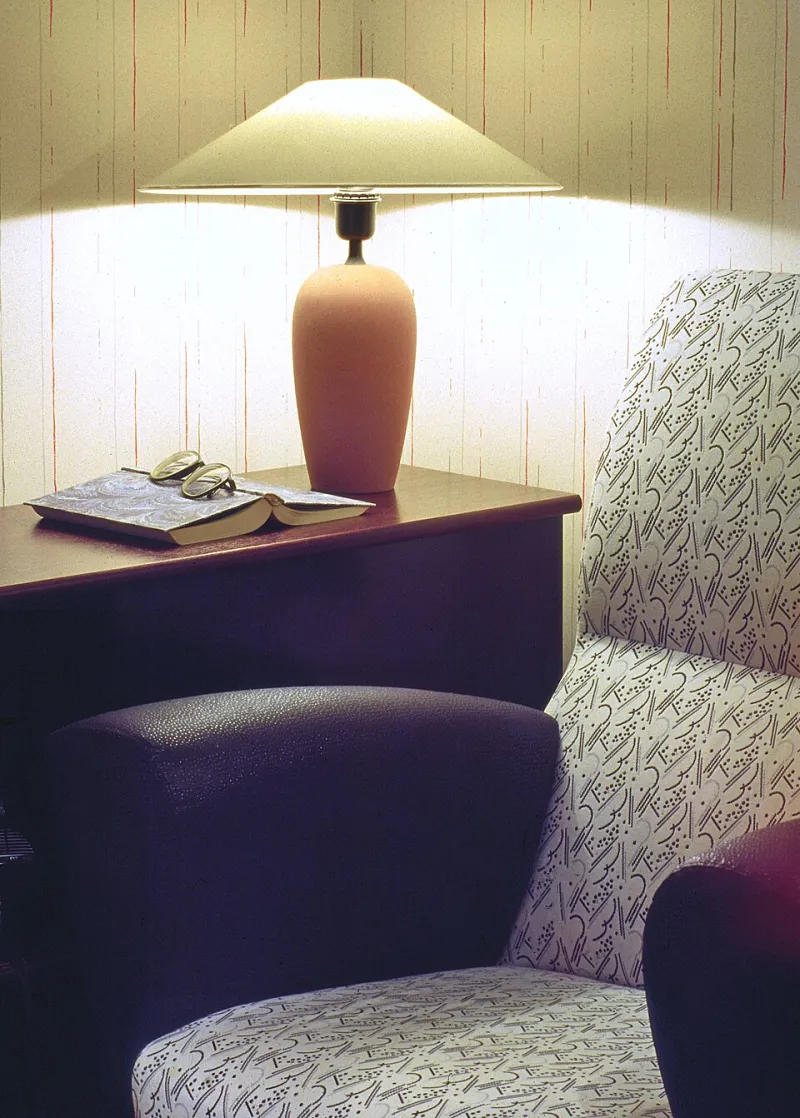
Clutter, in the psychological sense, isn't about quantity. It's about unresolved decisions. That stack of books you've been meaning to donate? Clutter. The framed photo from your best friend's wedding that makes you smile every time you pass it? Not clutter — that's character. The decorative bowl you bought because you thought you were supposed to like it? Clutter. The vintage lamp you hunted down at a flea market in Austin that you'd cry over if it broke? Keeper.
The emotional weight of an object matters more than the object itself. Stuff that has no story, no function, and no real emotional resonance is the stuff quietly dragging your space down.
How to Actually Figure Out What Stays
Forget the dramatic "does it spark joy?" moment for a second. Here's a more practical framework that works for real apartments with real lives in them.
Ask: Does this object have a job? Function is a perfectly valid reason to keep something. Your blender, your toolbox, your extra set of sheets — these have jobs. Keep them. But be honest about the things that used to have jobs and now just take up space. That bread maker you used twice in 2019 is not pulling its weight.
Ask: Does this object have a home? If something doesn't have a designated place where it lives, it becomes clutter by default. It migrates. It ends up on counters, on chairs, on floors. If you can't think of where it belongs, that's a sign you might not actually need it — or that you need better storage before you can keep it.
Ask: Would I buy this again? This one cuts through a lot of sentimental fog. Not "do I feel guilty getting rid of it" but "if I saw this at a store tomorrow, would I spend money on it?" If the answer is a flat no, that's your answer.
Ask: Does looking at it cost me something? Some objects carry emotional weight that's more burden than comfort. The gift from someone you've had a falling out with. The hobby supplies for a hobby you've abandoned but feel guilty about quitting. The furniture from a chapter of your life you're actively trying to move on from. It is okay — genuinely okay — to let those things go.
The Zones That Matter Most
Not every room in your apartment carries equal psychological weight. Focus your energy where it counts.
Your bedroom is non-negotiable. Sleep quality is directly tied to visual environment. If your bedroom is doing double duty as a storage unit, a home office, and a laundry staging area, your brain is not getting the "safe to rest" signal it needs. Even if you can only control one room, make it this one.
Your entry area sets the tone for everything. The first thing you see when you walk in shapes the emotional temperature of your whole apartment. A chaotic entryway primes your brain for chaos. A calm one — even just a hook for your bag and a small tray for your keys — signals that you're home and things are under control.
Your main living space is where you decompress. Or at least, it should be. If your sofa is surrounded by piles, your coffee table is buried, and every surface has a "someday" project on it, decompression isn't happening. You don't need to be a minimalist — you just need visual breathing room.
What You're Actually Allowed to Keep
Let's be clear: this is not a pitch for bare white walls and a single succulent. A home without personality isn't restful — it's sterile, and sterile has its own kind of stress.
Keep the things that tell your story. The record collection. The gallery wall that took you three weekends to get right. The bookshelf that's genuinely overflowing because you love books. The collection of mugs that each came from somewhere meaningful. These things aren't clutter. They're the reason your apartment feels like yours and not a hotel room.
The goal isn't less stuff for the sake of less stuff. It's intentional stuff — things that are there because you chose them, not things that are there because you never got around to dealing with them.
That distinction? It's everything. And once you start seeing it, you can't unsee it.
Start Small, Feel the Shift
You don't have to overhaul your entire apartment this weekend. Pick one surface — one counter, one shelf, one corner — and apply the questions above. Clear what doesn't belong. Give what stays a proper home. Then just... live with it for a few days.
Notice how it feels to have that one spot resolved. That's not placebo. That's your nervous system responding to fewer open loops. That's what your apartment is supposed to feel like.
You can build from there.