Why Does My Apartment Make Me Tired? A Room-by-Room Energy Diagnosis
You made it through the day. You unlocked the door, dropped your bag, and fully expected your apartment to do its one job — help you decompress. Instead, an hour later, you're weirdly more exhausted than when you left the office. Your brain feels foggy. Your shoulders are tense. You're scrolling your phone just to escape the space you're literally sitting in.
This isn't just a bad mood. There's a real chance your apartment is actively working against you — and the good news is, most of the culprits are fixable without a renovation budget or a design degree.
Let's break it down room by room.
The Science Behind a Draining Space
Designers and environmental psychologists have been studying this for decades: the spaces we inhabit have a measurable effect on our stress levels, cognitive load, and even our sleep quality. Visual complexity — too many competing colors, patterns, or objects — forces your brain to process more information than it needs to, burning through mental energy without you even realizing it. Poor air quality and low ventilation can cause headaches and fatigue. Harsh or unbalanced lighting triggers tension. And clutter? Clutter is basically a to-do list your brain can never stop reading.
The problem is that most of us set up our apartments reactively — we put things where they fit, not where they function. Over time, that adds up to a space that quietly chips away at your well-being every single day.
Start with the Air (Seriously)
This one gets skipped constantly because it's invisible, but stale, recycled air is one of the most common energy-drainers in apartments — especially in older buildings or units with limited cross-ventilation.
If you can, open windows on opposite sides of your apartment for even 10 minutes a day to create airflow. If your building doesn't allow that or your windows face a brick wall, a HEPA air purifier can make a noticeable difference. A few well-placed houseplants — pothos, snake plants, peace lilies — won't replace a purifier, but they contribute to a healthier indoor environment and, honestly, just make a room feel more alive.
Also worth checking: when did you last change your HVAC filter? A clogged filter doesn't just reduce air quality — it makes your system work harder, which can actually increase background noise and temperature inconsistency. Both of those are low-key stressors.
The Living Room: Too Much Happening, Not Enough Purpose
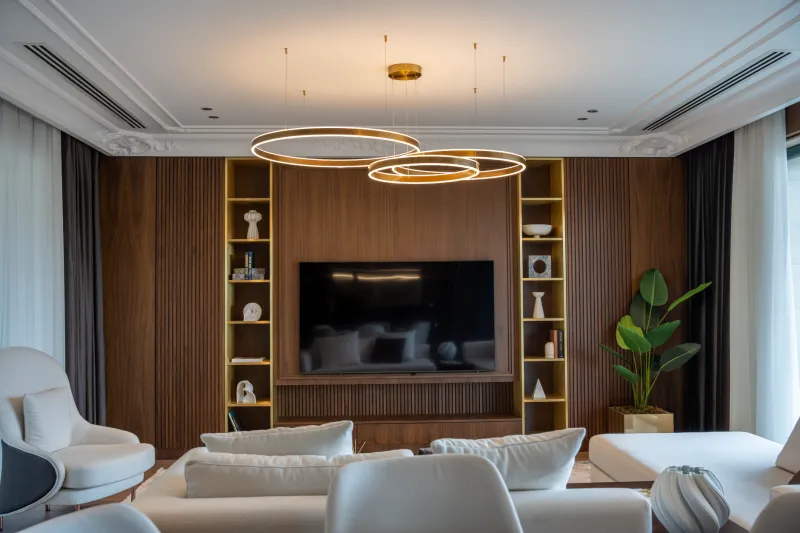
The living room is usually where the visual chaos hits hardest. Mismatched furniture from three different life stages, throw pillows in four different patterns, a bookshelf that's become a graveyard for random objects — it all adds up to a space that doesn't have a clear identity, and that ambiguity is mentally exhausting.
Start by identifying what you actually want this room to do for you. Is it a place to wind down? To socialize? To work from home? Pick one primary function and let that guide your decisions.
Then do a texture audit. If everything in the room is the same visual weight — all smooth surfaces, or all busy patterns — the room will feel flat or chaotic. Aim for contrast: a chunky knit throw next to a sleek leather sofa, a matte wall behind a glossy lamp. That kind of intentional variety actually calms the eye rather than overwhelming it.
Finally, pull your furniture slightly away from the walls. It sounds counterintuitive in a small space, but floating your sofa even six inches creates a cozier, more intentional arrangement — and weirdly makes the room feel bigger.
The Bedroom: Where Rest Goes to Struggle
If you're waking up tired, your bedroom setup deserves a hard look. The most common offenders:
Light bleed. Streetlights, phone screens, even the glow from a power strip — your brain registers all of it. Blackout curtains are one of the highest-ROI purchases a renter can make. You don't need expensive ones; Target and Amazon both carry solid options under $40 a panel.
Work creep. If your laptop lives on your bed, or your desk is in direct eyeline from your pillow, your brain never fully clocks out. If you're in a studio and separation is impossible, try a room divider or a curtain rod hung from the ceiling to create a visual boundary between your sleep zone and everything else.
Texture overload (or underload). A bedroom with zero softness — bare floors, no curtains, minimal bedding — feels clinical and cold, which keeps your nervous system slightly on alert. On the flip side, too many competing patterns on your bedding, curtains, and rug create visual noise right before sleep. Stick to two or three complementary colors and let texture do the work instead of pattern.
The Kitchen: The Hidden Anxiety Machine
A cluttered countertop is basically a guilt trip you see every morning. If your kitchen surfaces are covered in appliances you use twice a year, mail that has nowhere to go, and random objects that migrated from other rooms, your brain is registering that chaos every time you walk in.
You don't need a bigger kitchen — you need better boundaries. Clear your counters down to only what you use daily. Store the rest, even if that means getting creative with vertical shelving or over-the-door organizers. A clear counter feels like a deep breath.
Lighting matters here too. Many apartment kitchens rely on a single overhead fixture that's either too harsh or too dim. A plug-in under-cabinet light strip (no installation required) can transform how the space feels and makes cooking feel less like a chore.
The Entryway: First Impressions Are Everything — Including Your Own
The first thing you see when you walk in sets the tone for your entire evening. If it's a pile of shoes, a coat rack that's lost the battle, and a table covered in unopened mail, you're starting your home time on the back foot.
Even in a tiny entryway, a few intentional choices change everything: a small tray for keys and essentials, hooks at the right height for bags and coats, and one thing that makes you feel good — a plant, a piece of art, a candle. It doesn't have to be elaborate. It just has to be on purpose.
Quick Wins You Can Do This Weekend
Not ready for a full room overhaul? Start here:
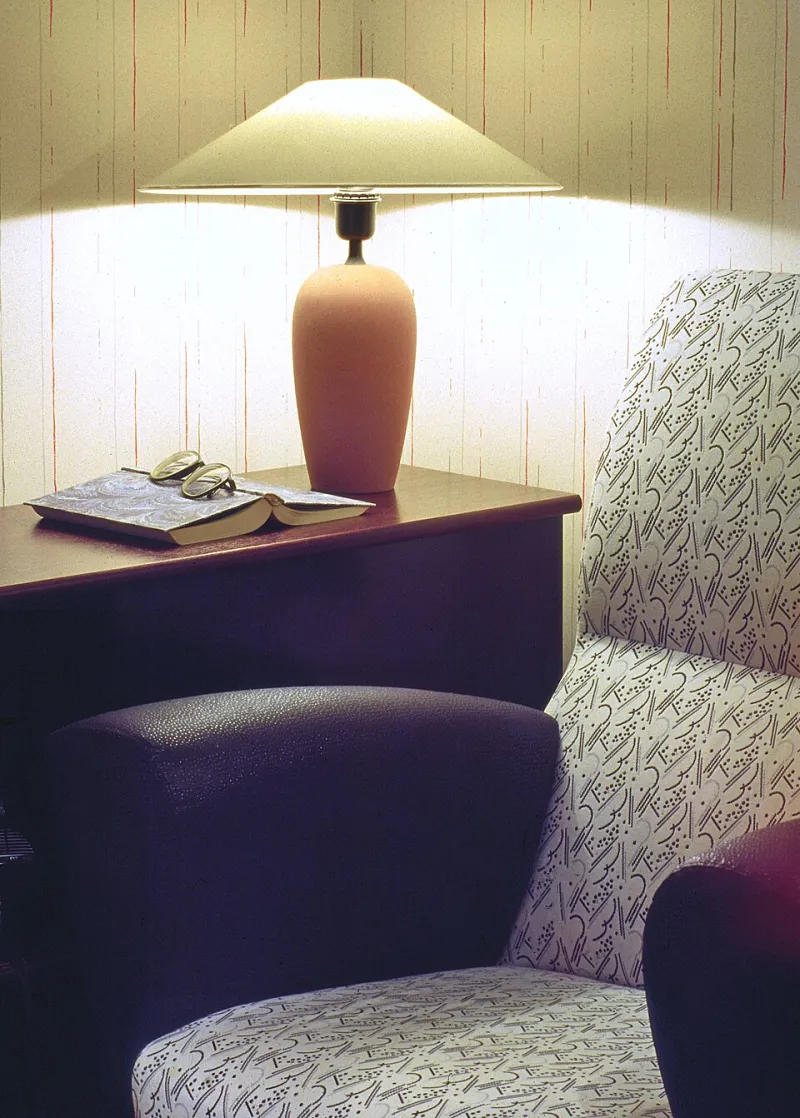
- Dim your lights after 7 p.m. Overhead lighting signals your brain to stay alert. Switching to lamps and warmer bulbs in the evening is a low-effort, high-impact change.
- Remove one thing from every surface. Just one. See how the room breathes differently.
- Add a scent anchor. A consistent, calming scent — lavender, cedar, eucalyptus — trains your brain to associate your home with relaxation. A candle or a diffuser is all you need.
- Rearrange one piece of furniture. Sometimes a space feels stale simply because nothing has moved in two years. Shifting even one chair can reset how a room feels entirely.
Your Apartment Should Work For You
Here's the thing: your home doesn't have to be Pinterest-perfect to be restorative. It just has to be intentional. When your space has clear purpose, decent air, thoughtful light, and a little visual calm, it stops draining you — and starts doing what it's supposed to do.
You live there. It should feel like it's on your side.